
1880 — Present
From a shipwrecked colonial scheme to a scrub settlement to a museum kept by volunteers — nine entries, catalogued in order, tell how New Italy came to be, and why it still matters.
The story of New Italy does not begin in Australia. It begins with a French confidence scheme: the self-styled "Marquis de Rays" sold hundreds of Italian and other European emigrants passage to a promised colony — "Port Breton" — on the island of New Ireland, in what is now Papua New Guinea. The colony existed only on paper.
Ships sailed regardless, loaded with families who had sold what little they owned to buy a future that had never been built.
What awaited the settlers was jungle, not infrastructure — no cleared land, no housing, no supply chain, and swiftly, disease and starvation. The expedition collapsed catastrophically within months. Survivors were left stranded on the far side of the world with nothing.
Word of the disaster reached the Australian colonies, and a rescue was organised for the stranded emigrants. Ships carried the survivors south across the Pacific to Sydney Harbour — landfall in a country that had never been their destination, among people who did not speak their language.
It was, for most, the first solid ground they had stood on in the better part of a year.
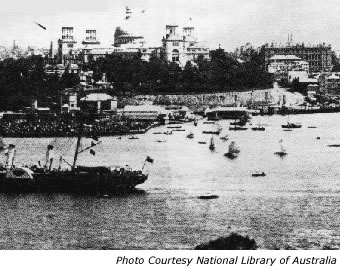
NSW Governor Sir Henry Parkes arranged both the rescue passage and the survivors' resettlement, moving the group north to the Richmond River district near Woodburn — land dense with scrub, far from any Italian-speaking community, but land nonetheless.
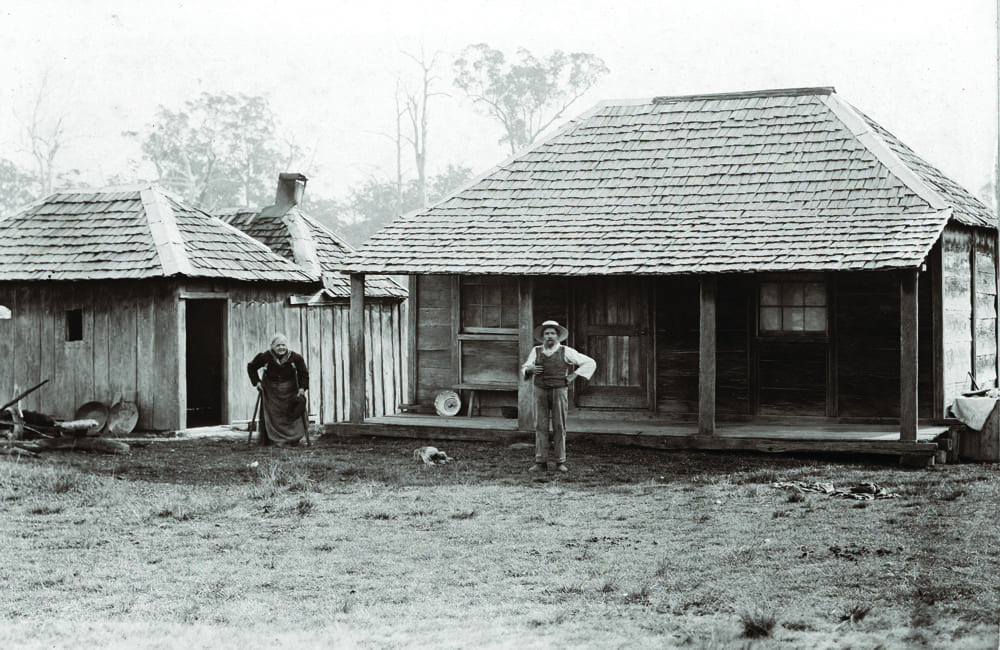
In 1882, the surviving families broke ground on what became New Italy — an Italian-speaking farming settlement carved out of the Northern NSW bush by hand. What they built was not a monument but a working village: homes, a school, a church, and fields cleared acre by acre.
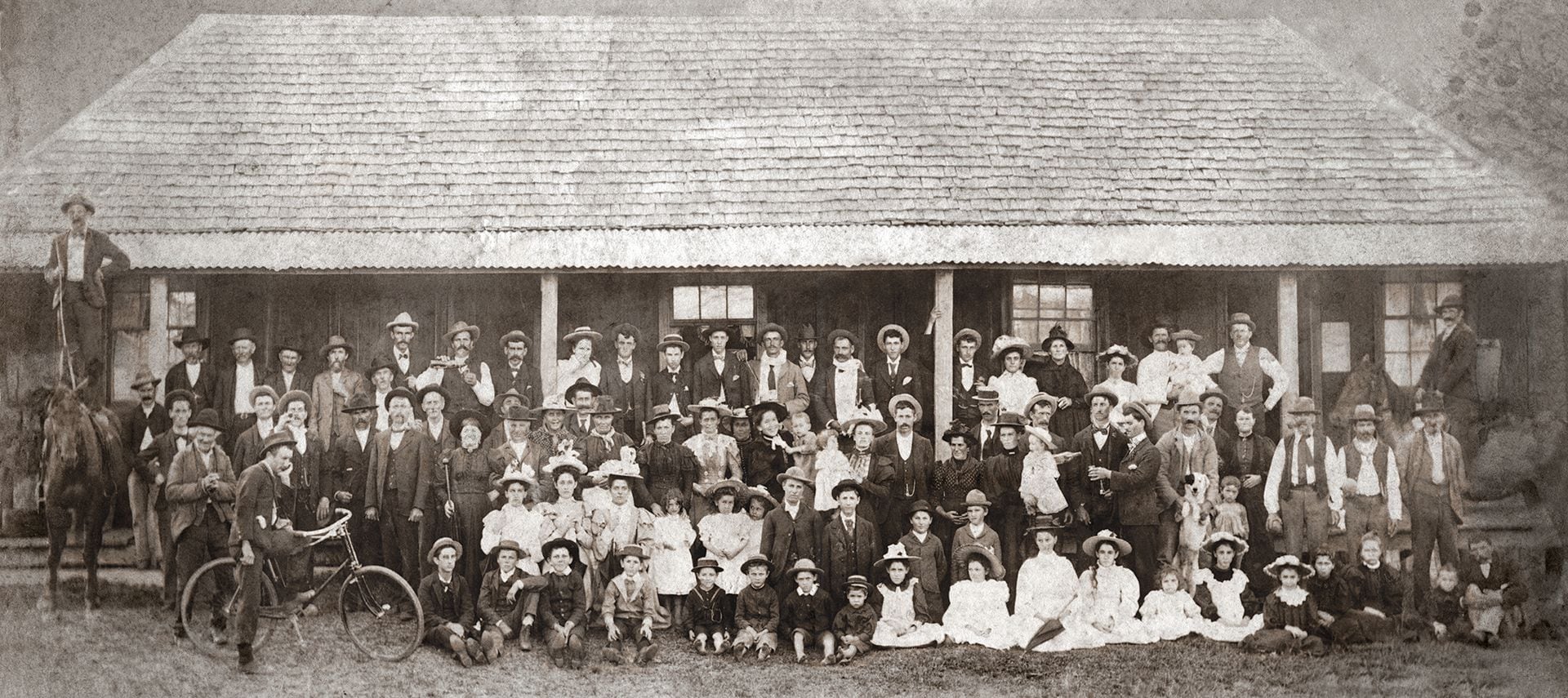
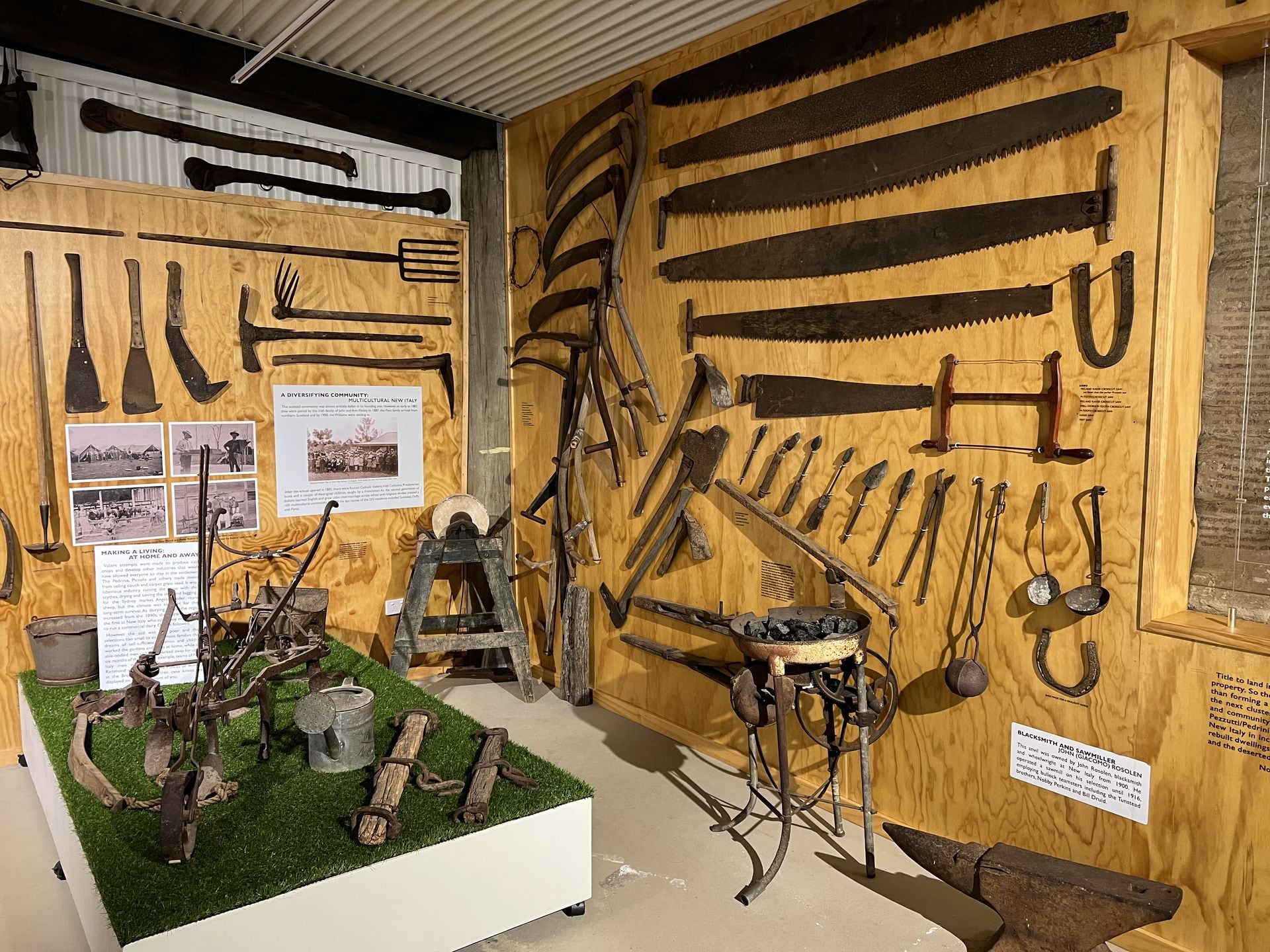
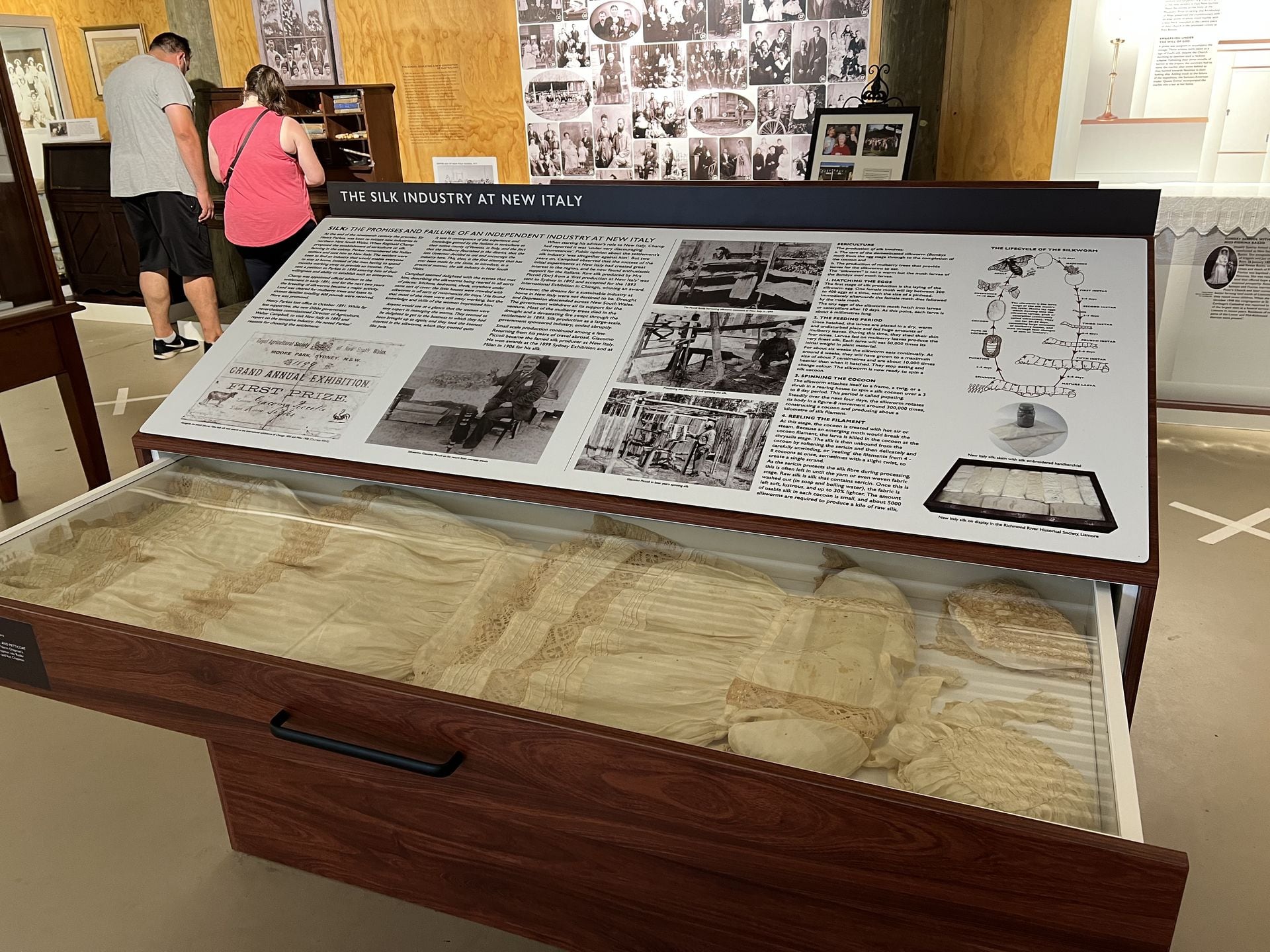
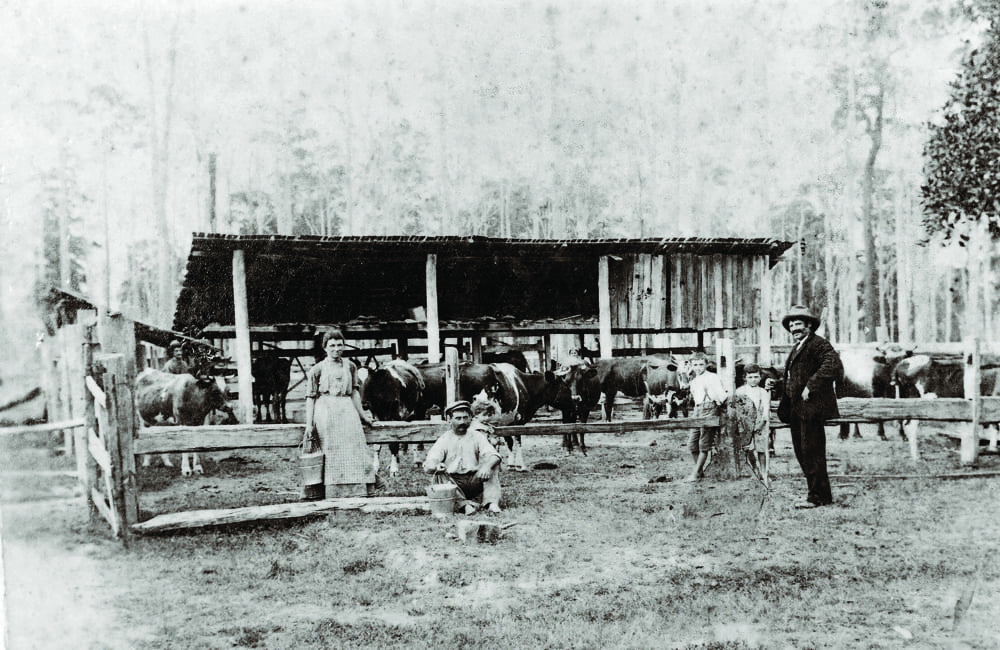
New Italy grew into a genuine industrial experiment. Its sericulture — silk farming — won prizes at exhibitions in both Sydney and Milan before drought ended the trial. Alongside the silk, the settlement ran dairying, timber-getting and blacksmithing, the anvil and forge at the centre of daily working life.
The museum's collection still holds the tools of that decade: pioneer farm equipment, a working blacksmith's anvil display, and the "Silk Industry at New Italy" exhibit itself.
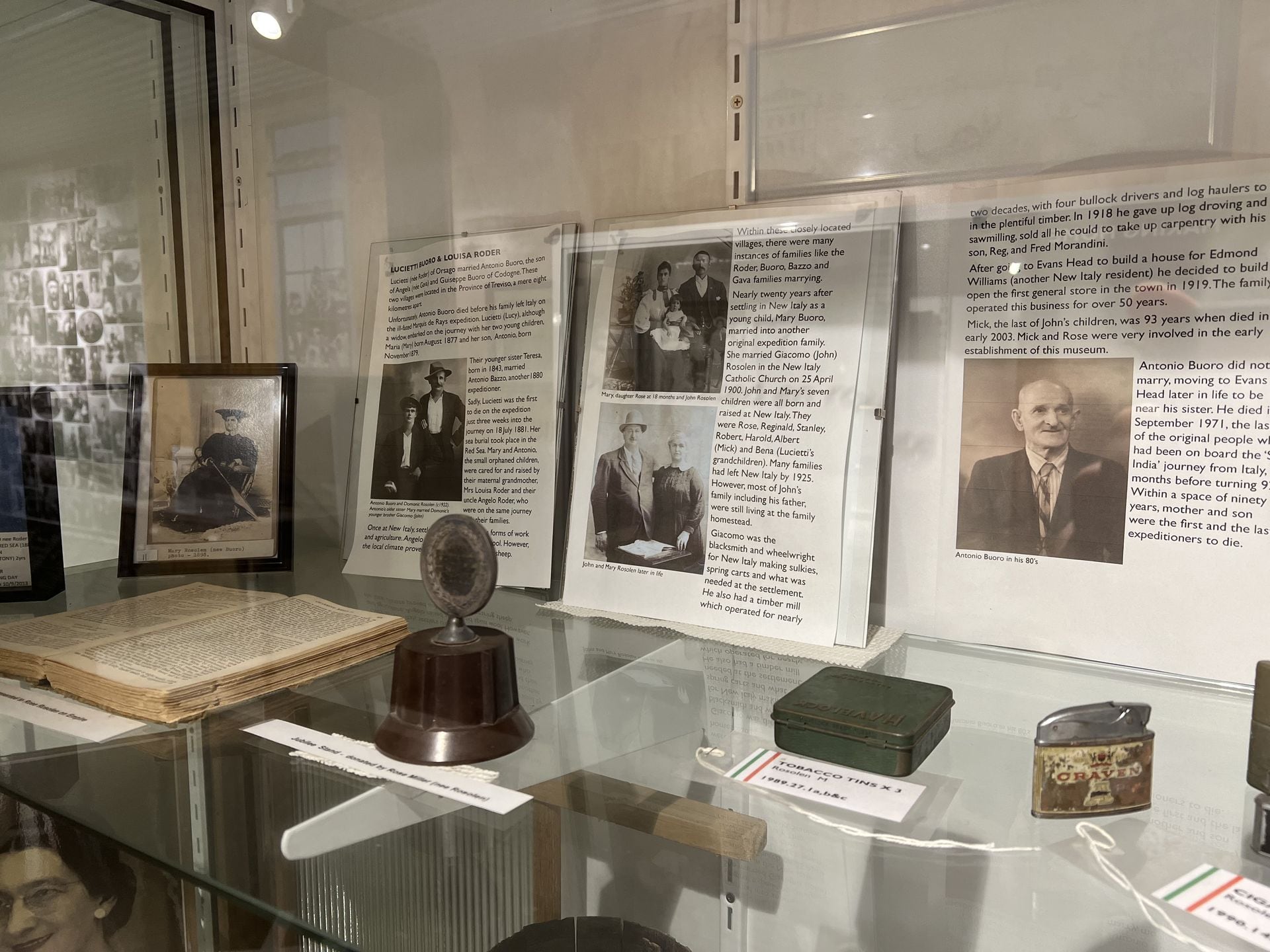
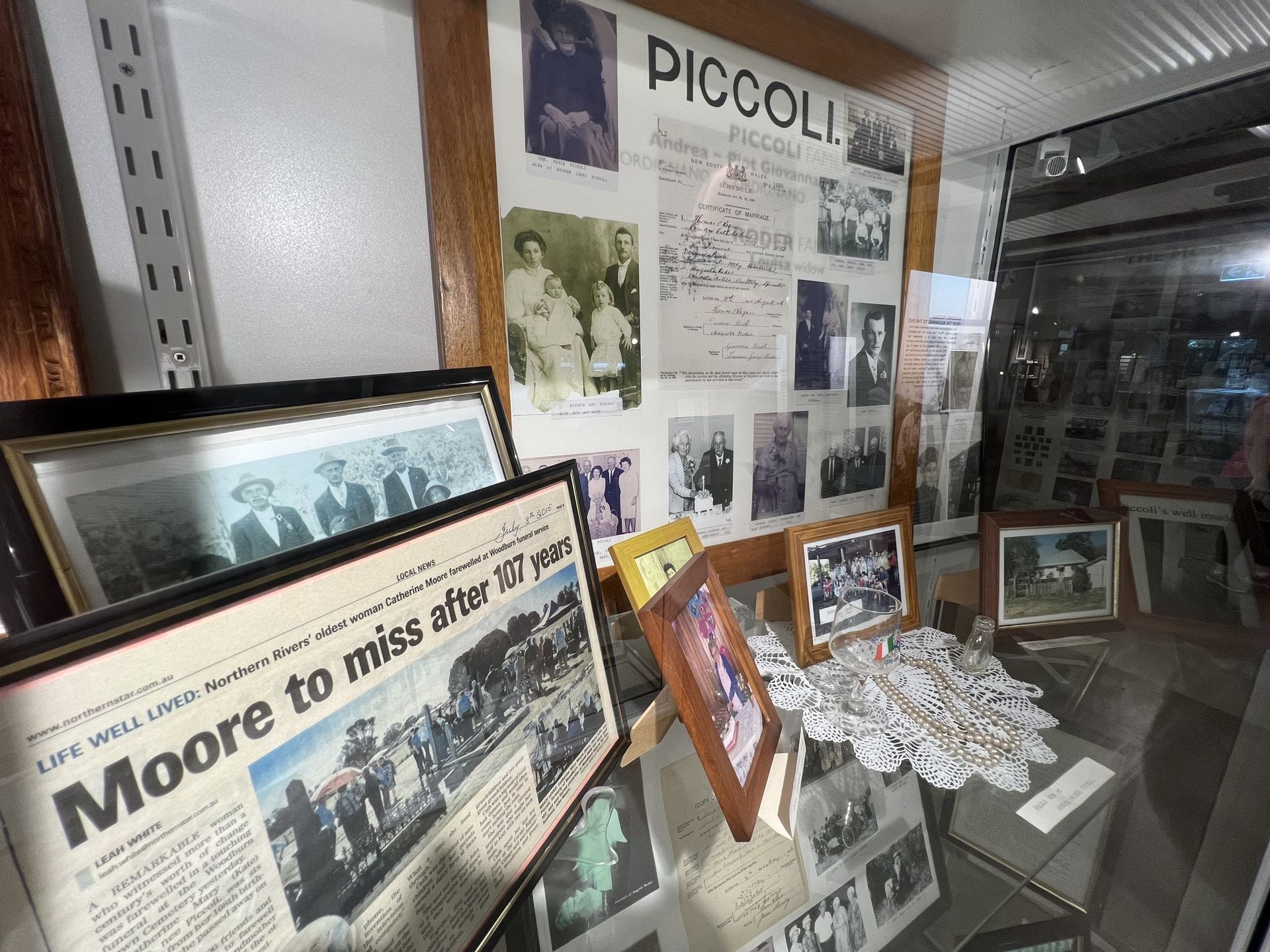
Drought, the end of the silk trade, and the pull of opportunity elsewhere gradually thinned the settlement. Families dispersed across the region and beyond over the following decades — the fields cleared with such effort slowly returning to grazing land and bush.
In the 1930s, Giacomo Piccoli — a descendant of the original settlers — returned to the site with a different purpose: memory. He established the Park of Peace, a memorial ground centred on "Il Pioniere," a seated pioneer figure with his dog, flanked by the Italian and Australian flags.
It remains the emotional centre of the site — the place where the settlement's story is held rather than told.
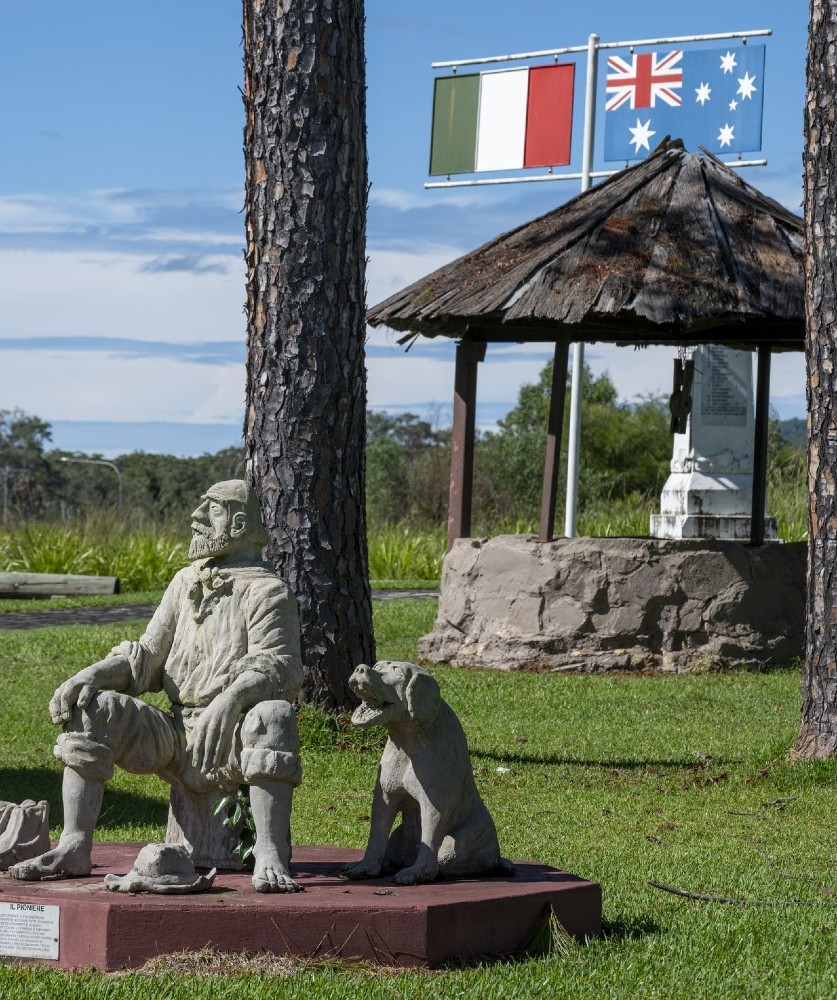
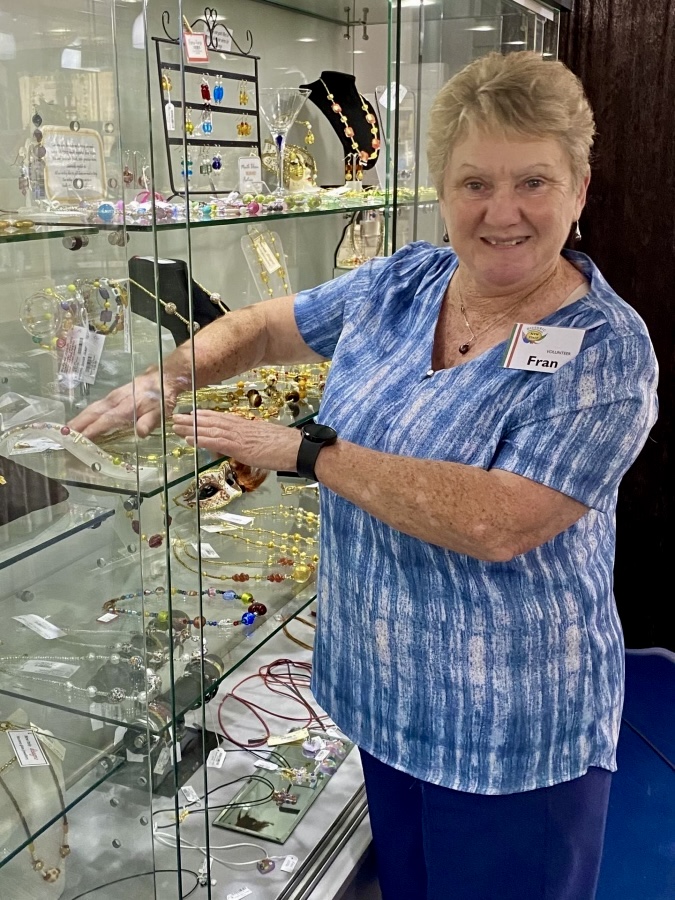
Today, New Italy Museum Inc. is an ACNC-registered charity, entirely volunteer-run. The original Park of Peace and museum halls now share the grounds with a café, gift shop, glass studio and a relocated Expo pavilion — each addition made in keeping with the spirit of the founders, not in spite of it.
Genealogy and museum collection databases let descendants trace their pioneer ancestors, quarterly newsletter Il Giornale keeps members connected, and Anniversary Day, ANZAC Day and Remembrance Day services still bring the community back to the same ground, year after year.
Closing Entry
Every anvil, photograph and silk ribbon in this collection survives because someone chose to keep it, catalogue it, and open the door to strangers. That has not changed since 1882 — only the hands doing the keeping.