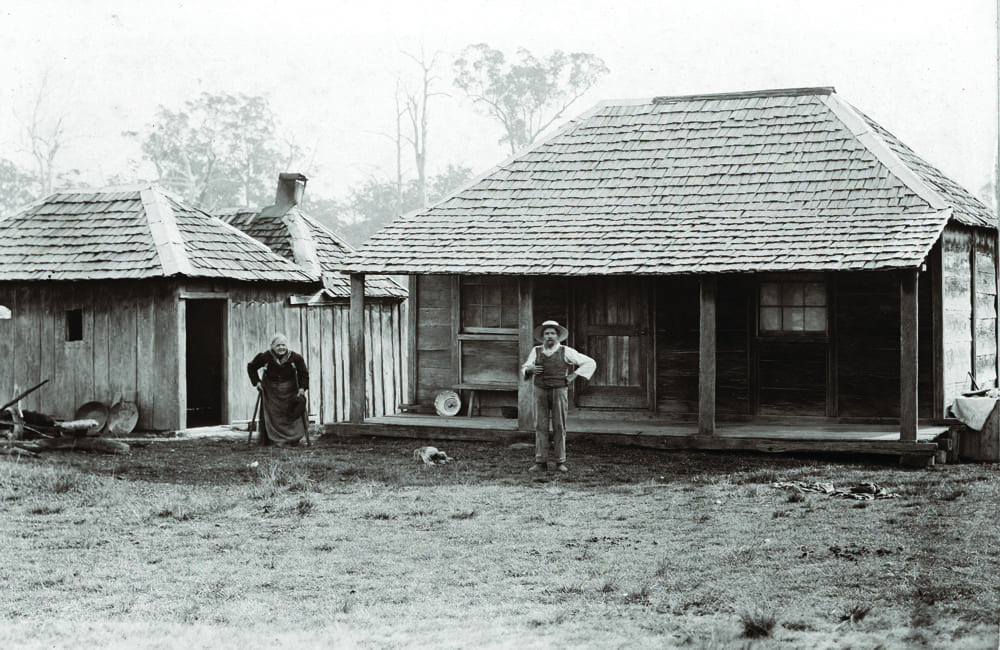
How a catastrophic migration scheme became one of the Northern Rivers' most remarkable Italian settlements — and how a handful of volunteers keep that story alive today.
In 1880–81, the Marquis de Rays ran a scheme that shipped hundreds of Italian and other European emigrants across the world to a promised "colony" — Port Breton, on New Ireland, in what is now Papua New Guinea. Families sold everything for the promise of land, houses and a thriving new settlement.
There was no colony. No houses, no cleared land, no infrastructure — just jungle, disease and starvation. The expedition collapsed catastrophically, and the survivors were left stranded on the far side of the world with nothing to go home to.
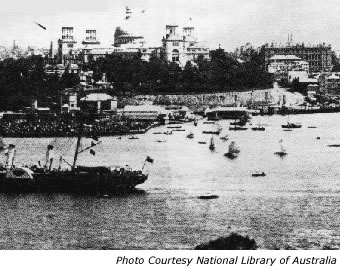
The chain of events that turned a shipwrecked dream into a working Italian farming community in the Australian bush.
Word of the disaster reached the colonies. NSW Governor Sir Henry Parkes arranged rescue ships and passage to Sydney for the stranded survivors — an act of intervention that saved hundreds of lives.
The survivors landed in Sydney in 1881 with almost nothing — but with each other, and with the skills of farmers, silk-workers and tradespeople. From here, families made their way north to the Richmond River district in search of land to start again.
In 1882, Italian pioneer families began clearing dense scrub near Woodburn to build a new life. What emerged was New Italy — a close-knit, Italian-speaking farming community built entirely from scratch.
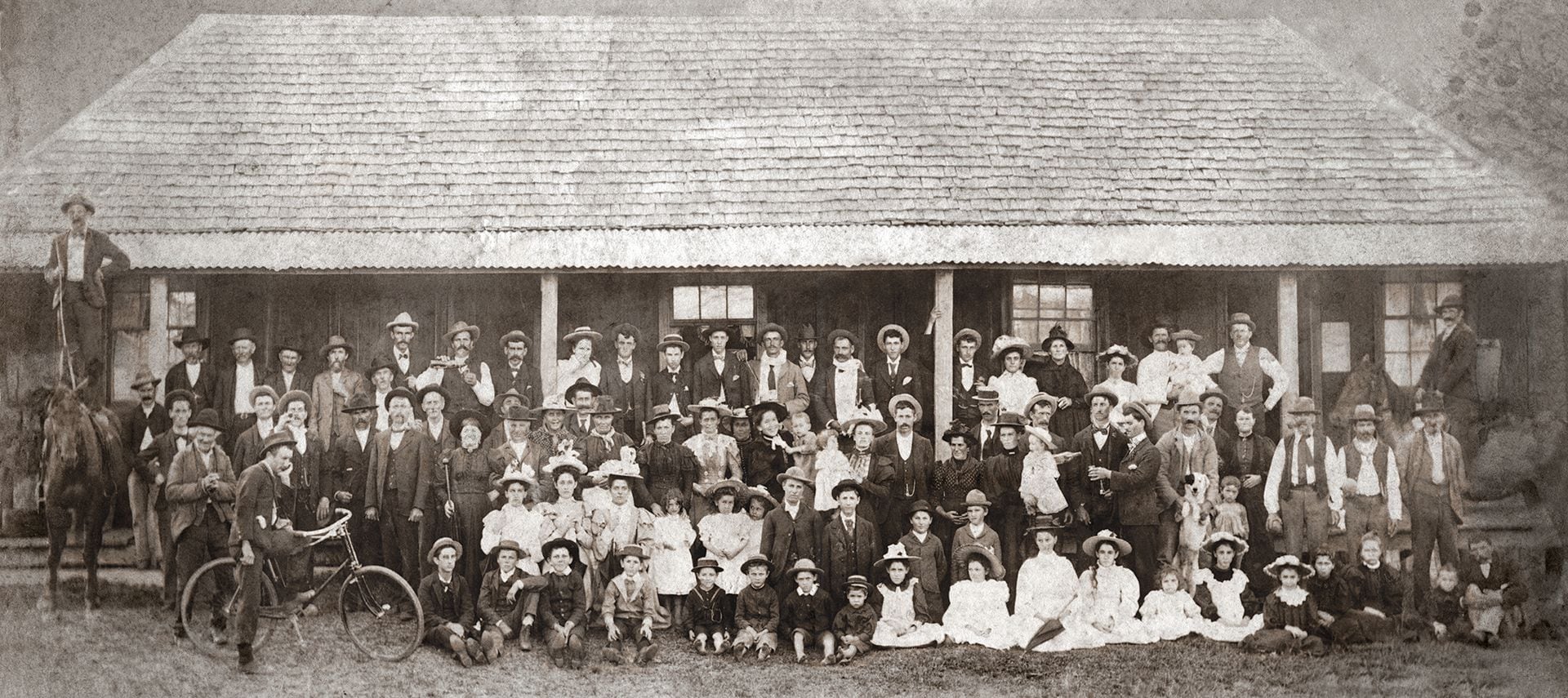
New Italy's most remarkable achievement: an experimental silk (sericulture) industry that won prizes at exhibitions in both Sydney and Milan — before a prolonged drought brought the industry to an end. Dairying, timber-getting and blacksmithing sustained the community alongside it.
Over the following decades, as opportunities drew younger generations to towns and cities, the population of New Italy slowly dispersed. The buildings and the spoken Italian faded — but the memory, and the descendants, did not.
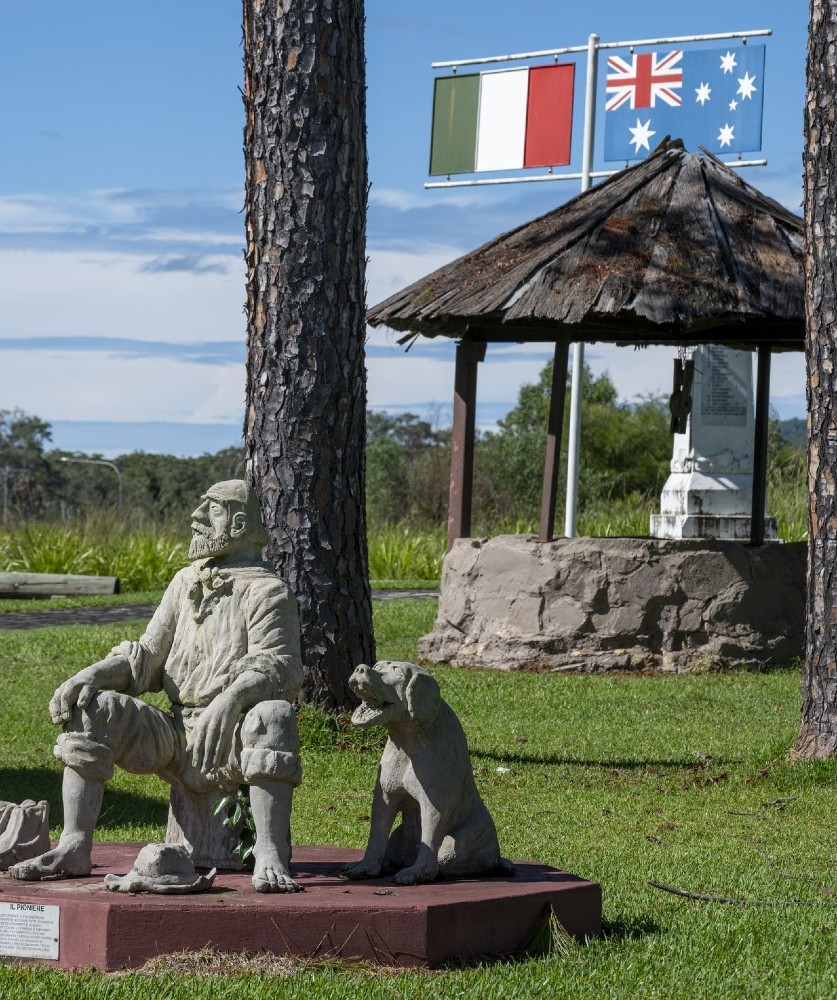
In the 1930s, Giacomo Piccoli — a descendant of one of the settler families — established a "Park of Peace" on the site to honour the pioneers. Its centrepiece, the "Il Pioniere" statue, depicts a seated pioneer with his dog, flanked by Italian and Australian flags.
An experimental industry that won prizes at Sydney and Milan exhibitions before drought ended it in the 1890s.
A steady, sustaining industry for the settlement as the region developed around it.
Clearing and working the dense scrub that surrounded the new settlement.
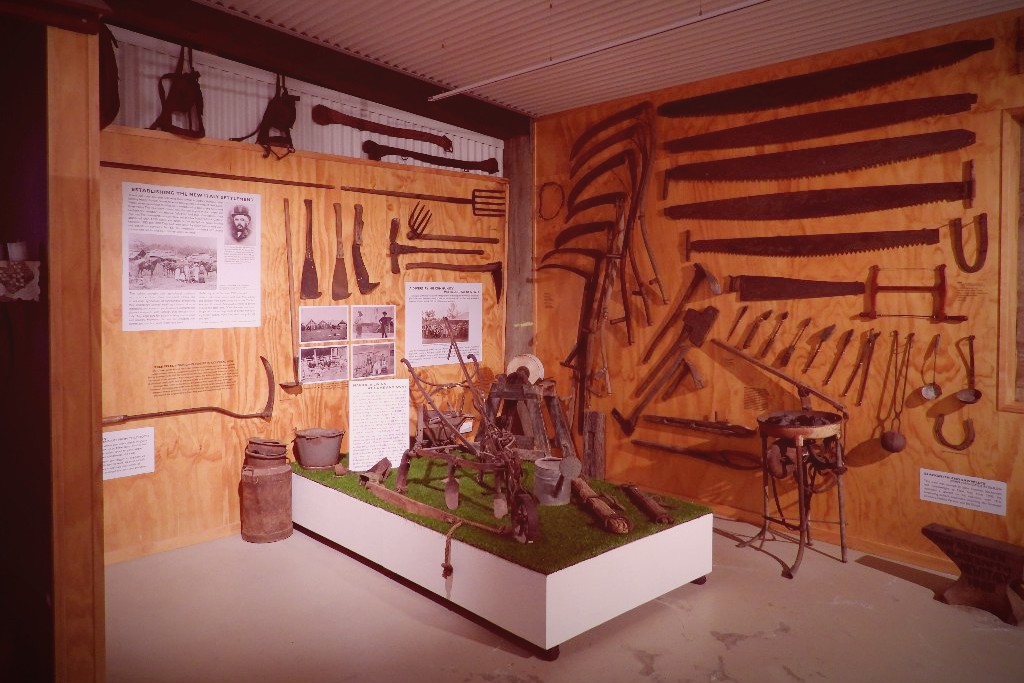
Tools and ironwork for the whole community — the forge and anvil are preserved in the museum today.
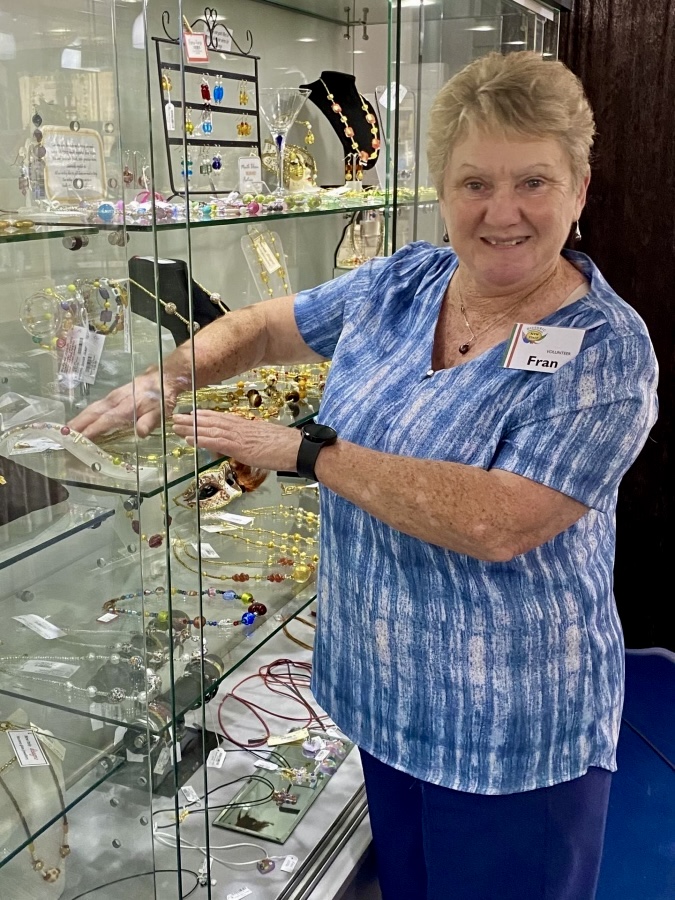
Historic New Italy is now a museum complex — entirely volunteer-run, member-supported, and registered with the ACNC as a charity. The pioneer story is preserved not behind glass alone, but through active stewardship.
Photographs and displays are one thing — walking the same ground the pioneers cleared, under the same Park of Peace flags, is another. Plan your visit and see it for yourself.
Plan Your Visit →