
Shipwrecked by a lie, rebuilt by hand.
From a promised colony that did not exist, to a village that thrived for half a century in the Northern Rivers scrub — and the descendants who still care for the ground it stood on.
A colony sold to families who had nothing to spare.
In 1880 a French adventurer styling himself the Marquis de Rays sold hundreds of Italian, French and other European families a dream: fertile land, an established port and a ready-made colony called Port Breton on the island of New Ireland, today part of Papua New Guinea. Families sold what little they had and boarded ships for a new life.
There was no colony. The ships arrived to dense jungle, no buildings and no supplies. The scheme was a fraud, and disease, starvation and despair took hold among emigrants who had nowhere to turn and no way home.
"They told us of a city with a harbour. We found only the trees, and the sea we had crossed to reach them."Illustrative — in the spirit of settler recollection
From rescue to settlement.
- 1881
Sir Henry Parkes intervenes
Word of the survivors' plight reached NSW, and Sir Henry Parkes arranged rescue vessels and passage to Sydney for hundreds of stranded emigrants.
- 1881
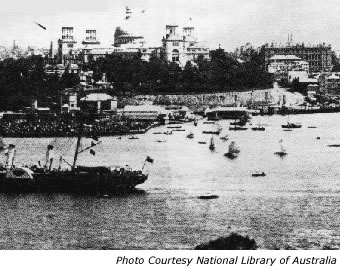
Landing at Sydney Harbour
The survivors landed exhausted and largely destitute. Many were directed north toward the Richmond River district, to land offered near Woodburn.
- 1882
New Italy is founded
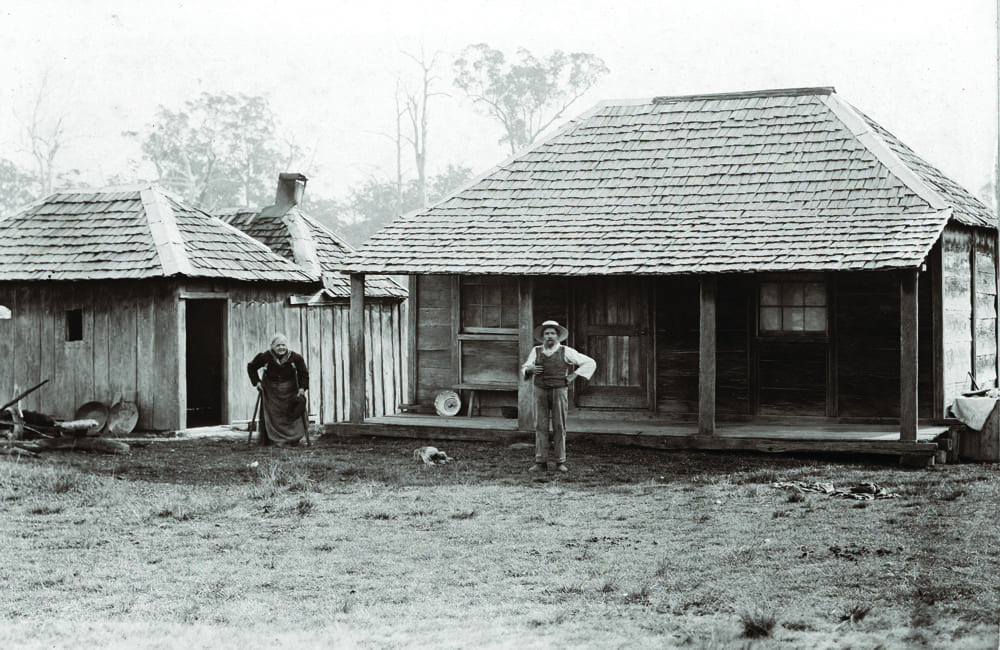
The resettled families began clearing scrub near Woodburn and founded New Italy — an Italian-speaking farming community built from nothing.
- 1890s
The silk years
An experimental silk industry won prizes at exhibitions in Sydney and Milan, alongside dairying, timber-getting and blacksmithing, until a long drought ended the silk trade.
- 1900s–1920s
Families disperse
Opportunities elsewhere gradually drew families away, and the community that had spoken Italian in the scrub scattered across the region and beyond.
- 1930s
Giacomo Piccoli's Park of Peace
Settler descendant Giacomo Piccoli established the Park of Peace on the original site so the pioneers would not be forgotten — the seed of today's museum.
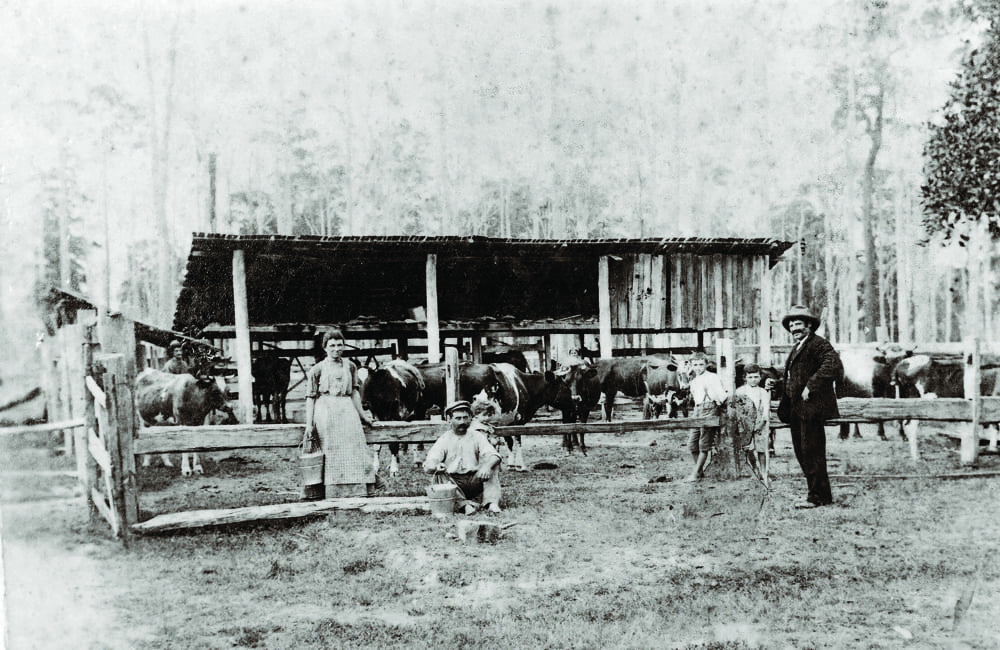
Four trades, worked by hand, turned scrub into a village.
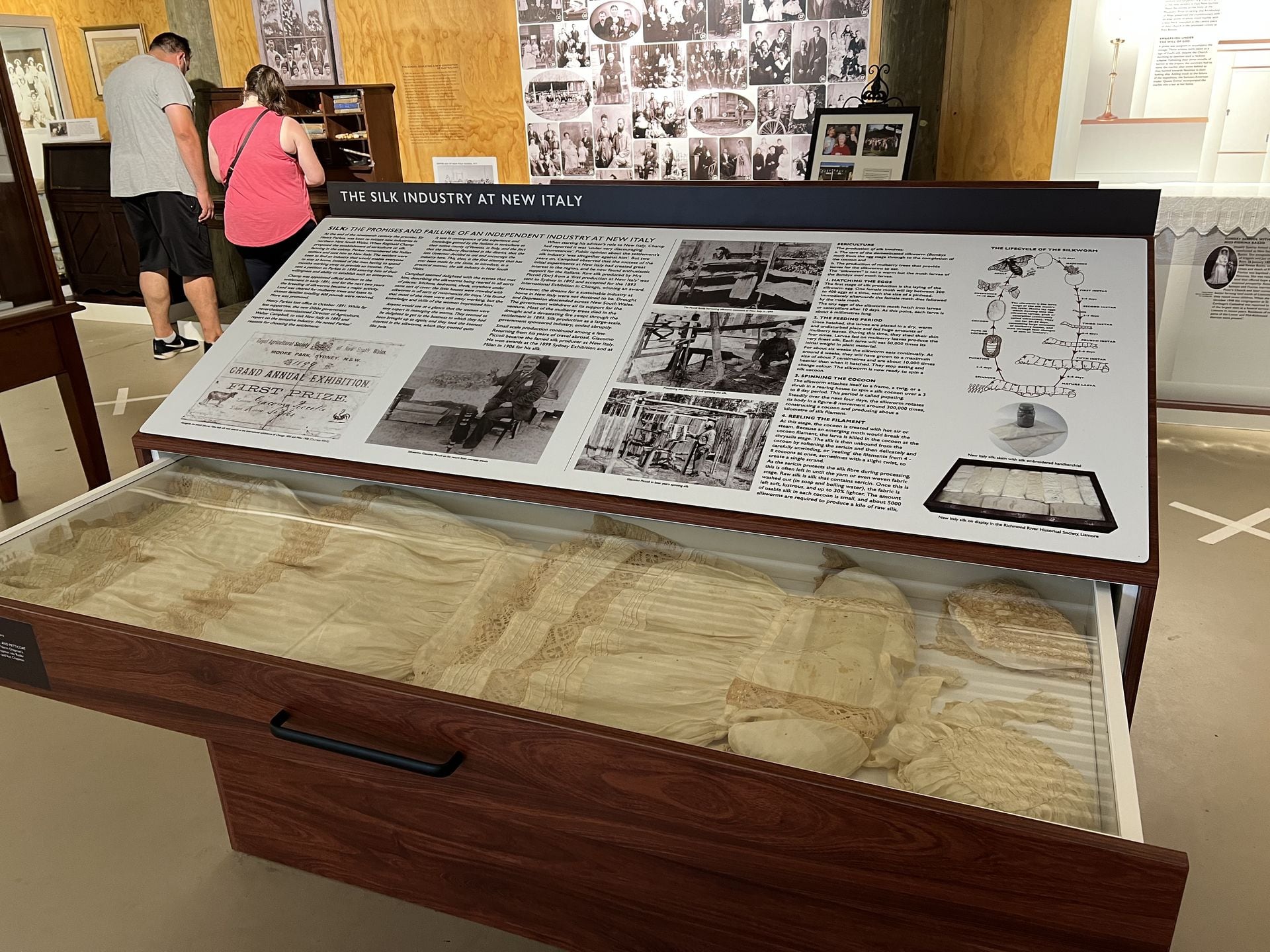
Silk
An award-winning experimental industry, prizewinning in Sydney and Milan.
Dairy
Herds worked by the settler families as the district's dependable trade.
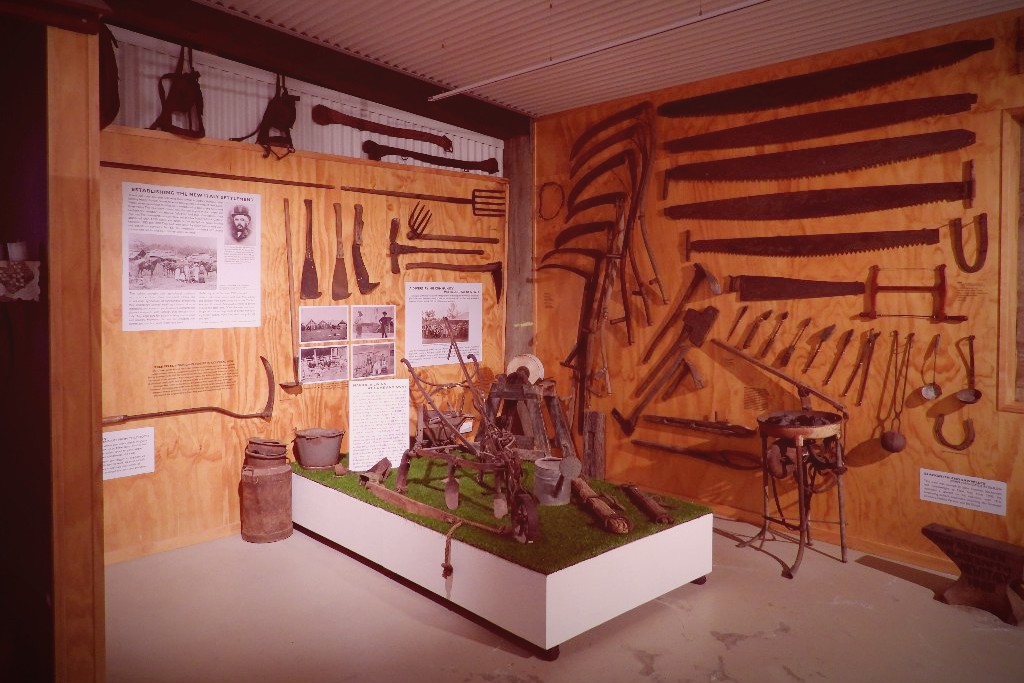
Blacksmithing
A working anvil and forge, with tools still on display in the museum today.
Timber-getting
Scrub cleared and milled by hand to build the settlement itself.
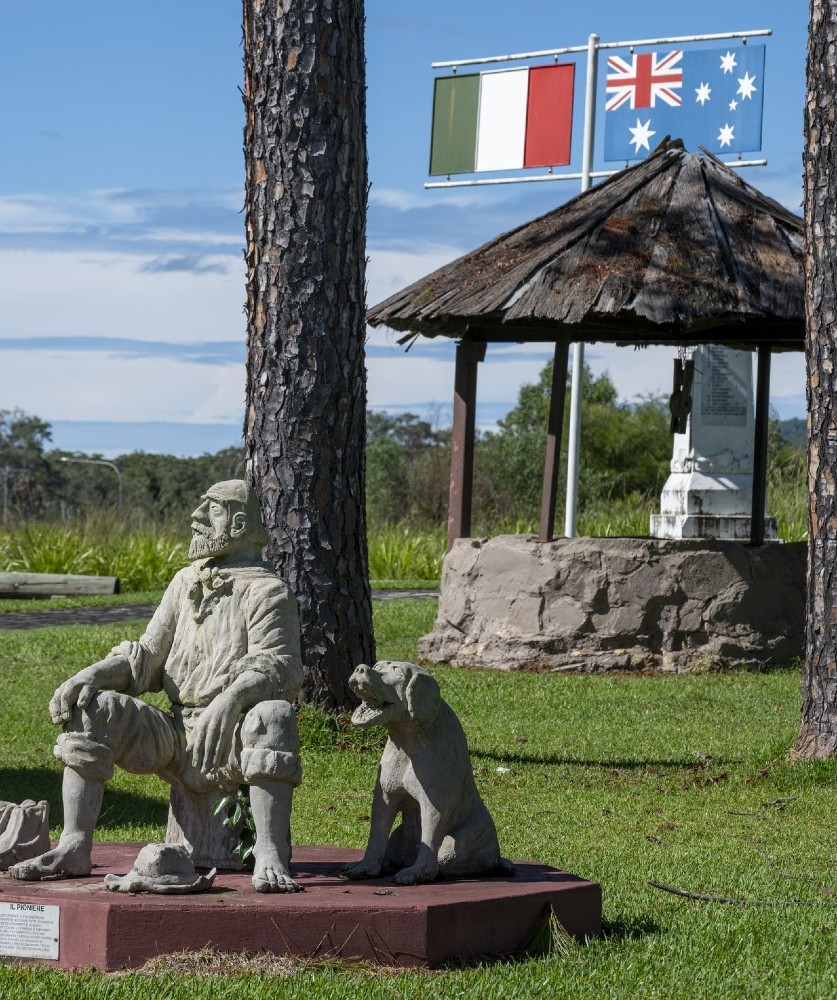
A seated figure and his dog, watching over the settlement still.
Giacomo Piccoli's 1930s memorial gave the pioneers a permanent place of remembrance: the Il Pioniere statue, a seated pioneer figure with his dog, flanked by the Italian and Australian flags. It remains the emotional centre of the grounds, framed by a timber gazebo shrine and the quiet of the surrounding park.
"Two flags fly above him now — the one he left, and the one that took him in."
Volunteer-run, member-supported, still telling the story.
New Italy Museum Inc. cares for the site as an ACNC-registered charity. Descendants and community members give their time so the story stays told.
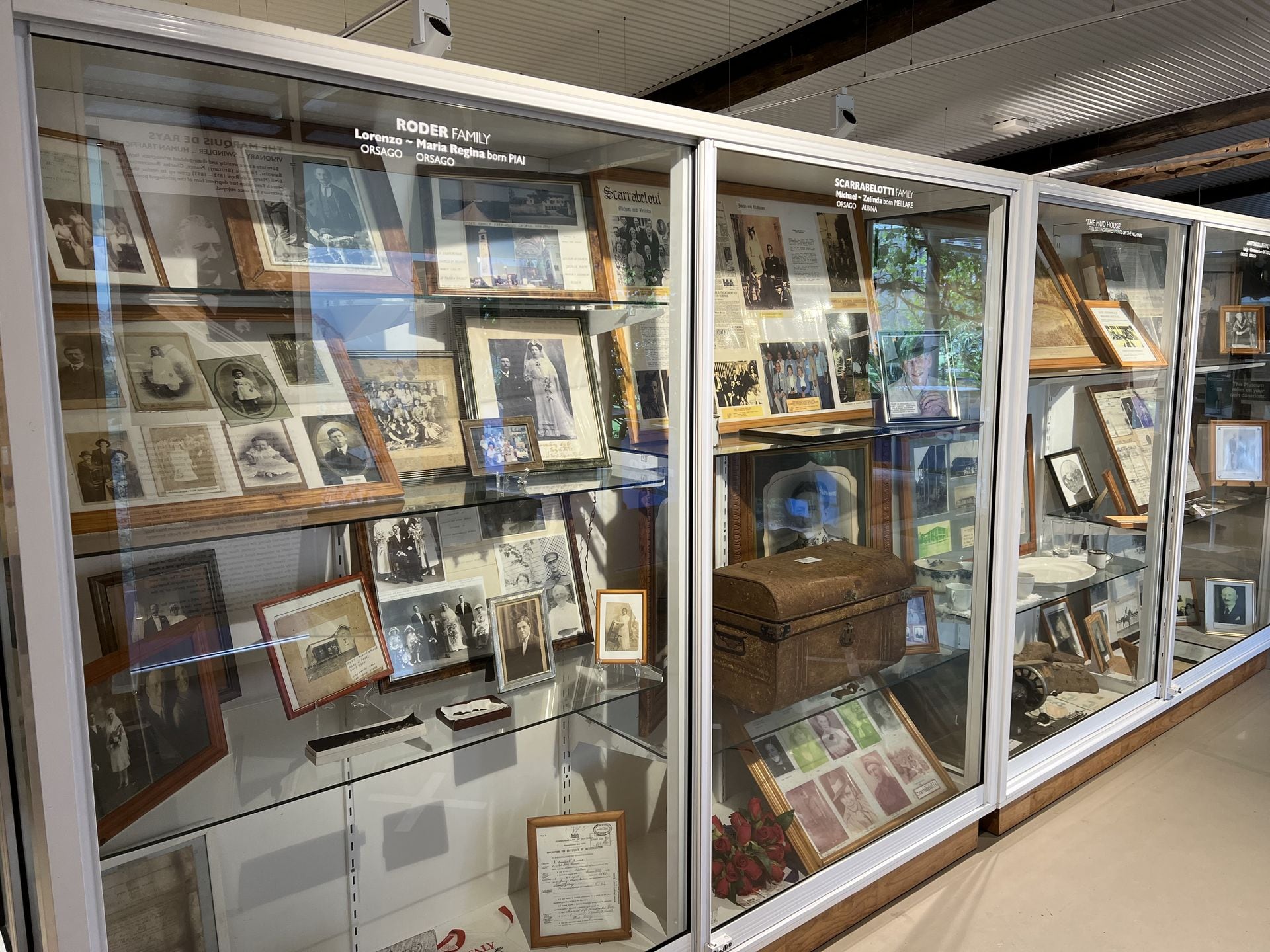
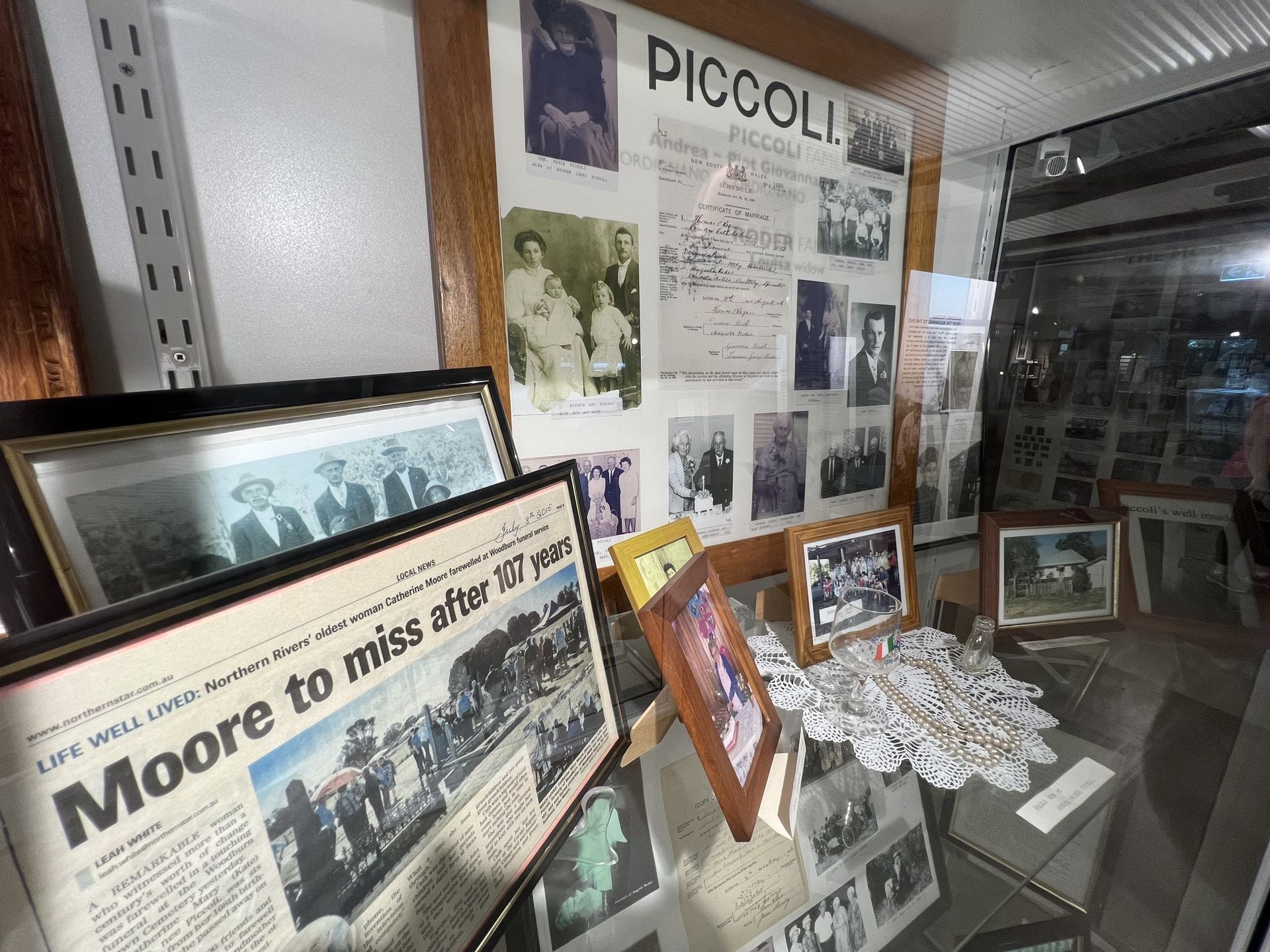
Genealogy & collections
Family-history databases and collection records support descendants tracing pioneer families back to 1882.
Research enquiries →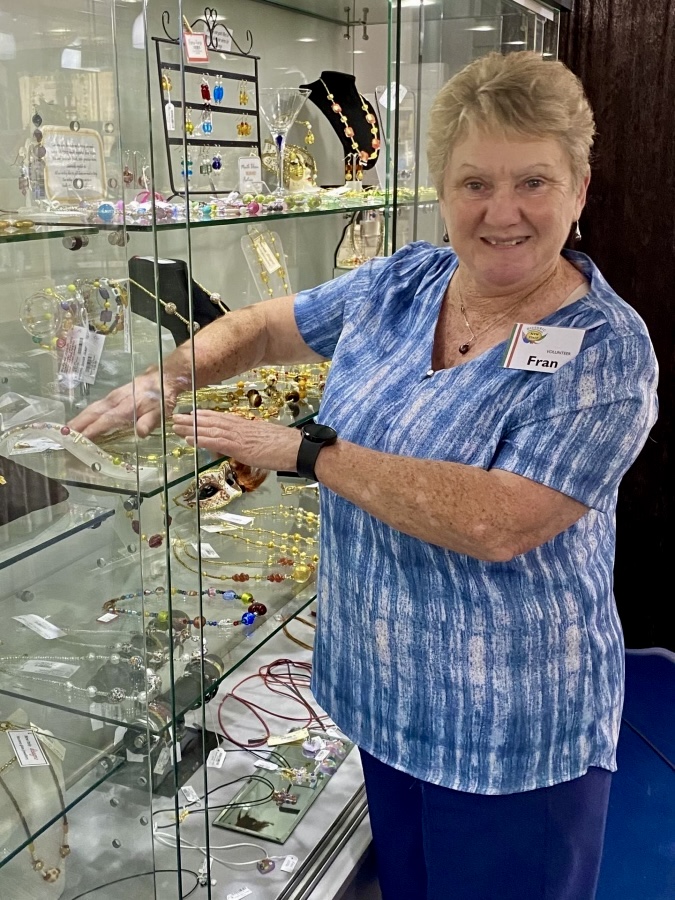
Volunteer working bees
Regular working bees and a volunteer roster keep the museum, pavilion and grounds running with no paid staff.
Get involved →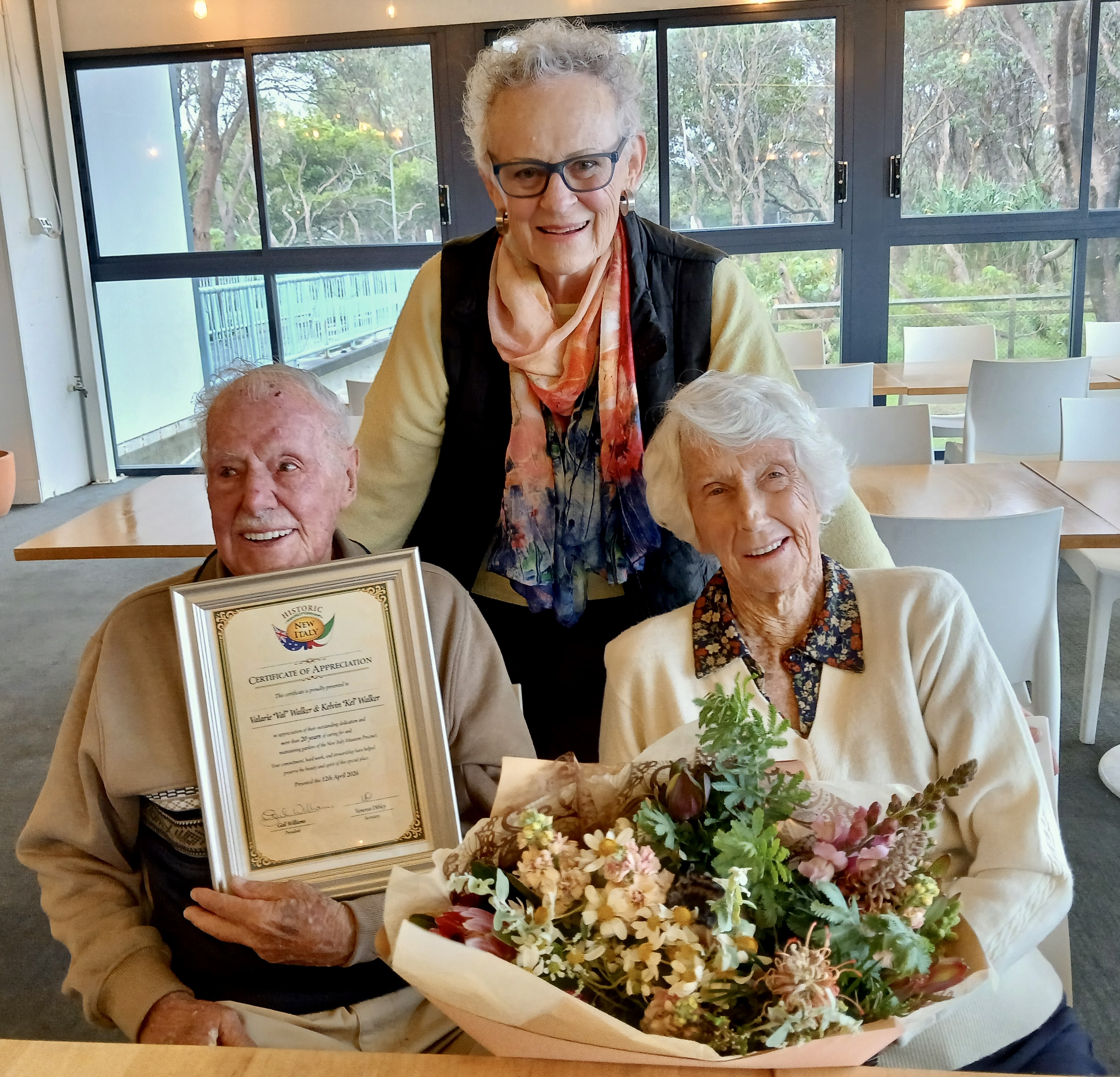
A living community
Anniversary Day, Alpini gatherings and the quarterly Il Giornale newsletter keep descendants connected to the site.
Events →Come and see it for yourself.
Free entry, seven days a week, right on the Pacific Highway at Woodburn.